Best Tips for Traveling to Nepal in 2026
Nepal offers an unforgettable mix of dramatic Himalayan landscapes, deep cultural heritage, and warm hospitality. To ensure a safe, smooth, and deeply rewarding journey, here are the best expert travel tips:
 Best Tips for Traveling to Nepal
Nepal is a renowned country for its lovely landscapes, remarkable mountains, and snowy terrains. If you’re an explorer, adventurer, journey seeker, and vacation planner, there are lots of activities you will be able to do to satisfy your passion. It’s the country where you’ll notice ten of the highest peaks on Earth. There is a wide range of activities for tourists in Nepal. Nepal is widely regarded as one of the ultimate adventure capitals of the world. Because of its dramatic geography, dropping rapidly from the highest peaks on Earth to low-lying tropical jungles, the country offers an incredible variety of adrenaline-pumping activities categorized by air, water, land, and mountain.
Nepali is the country’s main language, but English is also widely spoken. The friendly locals are very eager to share their culture and traditions with visitors from around the world. It’s a remarkable land that allures, inspires, and encourages anyone who sets foot on its magnificent land. Traveling to Nepal offers an unforgettable mix of dramatic Himalayan landscapes, deep cultural heritage, and warm hospitality. To ensure a safe, smooth, and deeply rewarding journey, here are the best expert travel tips:
Mount Everest
Most people visit Nepal to experience the Everest Base Camp. If you’re not interested in trekking, you can still get a glance at its beauty by taking a scenic flight around it.
Mountain Flight
The majority of the local airlines offer flights between 7 AM and 9 AM, and they all depart from Kathmandu. This is a must-try activity during your visit since it’s a once-in-a-lifetime experience. You’ll be able to glide above the clouds and enjoy Mount Everest without feeling exhausted from climbing it. The local airlines have made sure that the windows on the plane are non-tinted so that tourists can fully capture their beauty.
Not everyone is aware that you have the option not to trek to Everest Base Camp if you don’t want to. That’s why this is one of the top tips that you simply ought to learn before planning your trip to Nepal.
Nepali Food
The local Nepali food is also known as Dal Bhat, which is made up of lentils, rice, and soup. The side dishes consist of fresh vegetables like cauliflower and potato. It’s a vegetarian meal, but you can also request to add chicken or mutton to your order.
Local & International Flavors
During your visit, you will be amazed at the wide variety of meals you can choose from. You’ll be able to have an experience of local cuisine as well as international flavors. The folks enjoy their food being spicy. However, if you’re not an admirer of spicy food, you'll be able to request a milder version of the dishes they offer. Their customary cuisine is widespread around the city, so you’ll be able to experience it at just about any local restaurant.
Nepali food has been strongly influenced by Indian cookery, which makes it delicious.
Adventure
If you’re an explorer, adventurer, journey seeker, and vacation planner, there are lots of activities; Nepal should definitely be part of your bucket list. Its wonderful terrain makes it a top destination for adventure tourism. Here are some lists.
High-Altitude & Mountain Adventures
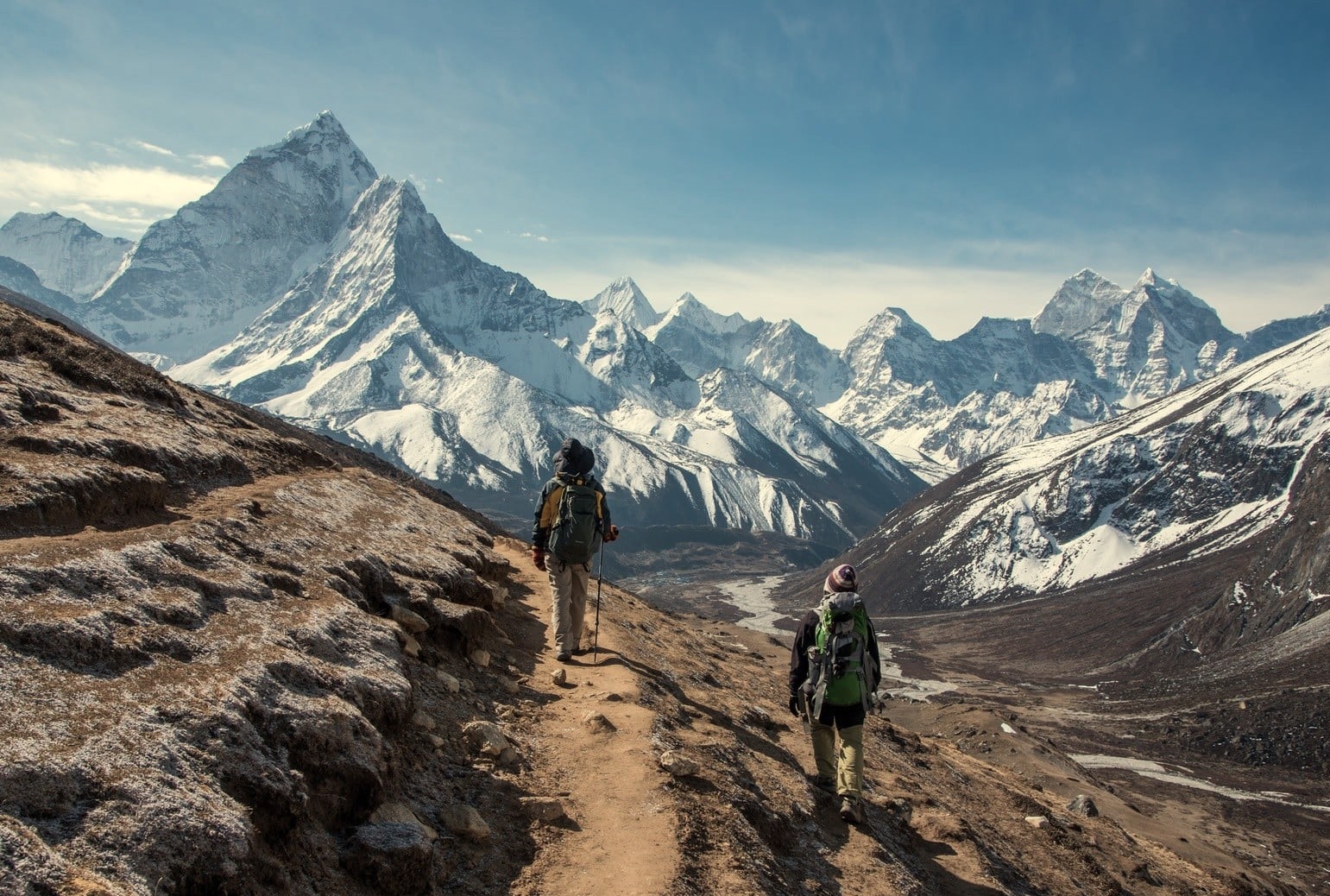
- Trekking – Everest Base Camp, Annapurna Circuit, Langtang Valley, Manaslu Circuit, and hundreds of other routes ranging from a few days to several weeks. Shorter trails like Mardi Himal and Poon Hill; Nepal is a global hub for hikers.
- Peak climbing – "trekking peaks" like Island Peak, Mera Peak, and Lobuche require basic mountaineering skills. Scaling expedition peaks like Mount Everest, Ama Dablam, or trekking peaks like Island Peak and Mera Peak for true mountaineering challenges.
- Mountaineering – expeditions to 8,000m giants including Everest, plus dozens of other Himalayan peaks
- High-altitude trail running/ultramarathons – increasingly popular in the Everest and Annapurna regions
- Skiing & Snowboarding: A rapidly growing winter sport in high-altitude, snowy destinations like Kalinchowk (Dolakha).
Aerial & Air-Based Adventures
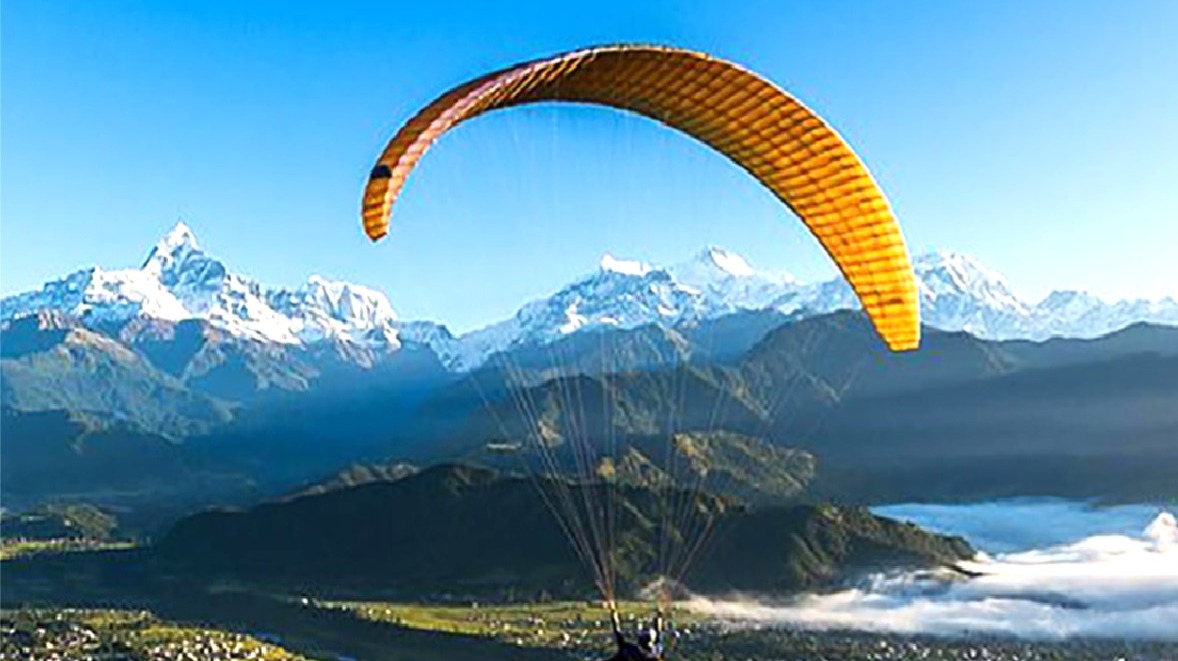
- Paragliding – Pokhara (Sarangkot) is world-famous for tandem paragliding over the Annapurna range and Phewa Lake
- Ultralight flights – scenic small-aircraft flights around Pokhara
- Mountain flights – fixed-wing scenic flights past Everest from Kathmandu
- Skydiving – tandem jumps over Pokhara with Himalayan views
- Zip-lining: Nepal hosts some of the steepest, fastest, and longest ziplines in the world, particularly the ZipFlyer in Pokhara (reaching speeds up to 120 km/h) and the scenic zipline in Dhulikhel
- Bungee Jumping & Canyon SwingsThe Cliff (Kushma): Suspended over the Kali Gandaki Gorge, this features one of the world’s highest bungee jumps (228 meters) and a giant canyon swing.
- The Last Resort (Bhote Koshi River): The legendary original 160-meter bungee jump and tandem swing over a raging tropical river gorge close to the Tibet border.
- HighGround Adventures (Pokhara): A vertical tower bungee experience closer to the city.
Water Adventures
- White-Water Rafting & Kayaking: Fed by Himalayan glaciers, Nepal's rivers offer world-class rapids ranging from Class II to Class V.
- Trishuli River: Excellent for beginners and families.
- Bhote Koshi & Marshyangdi: Steep, fast, and highly technical for experienced thrill-seekers.
- Sun Koshi & Karnali: Multi-day wilderness rafting expeditions through remote canyons.
- Canyoning: Rappelling, sliding, and jumping down wet waterfalls and steep stone gorges. Popular spots include Jalbire (near Chitwan/Trishuli) and Sundarijal on the outskirts of Kathmandu
Land-Based Activities
- Mountain biking
- Jungle safaris – Chitwan and Bardia National Parks for jeep safaris, canoeing, and wildlife spotting
(rhinos, tigers, elephants)
- Mountain Biking & Motorcycling: trails around Kathmandu Valley, Pokhara, and the Annapurna/Upper Mustang regions
- Riding the rugged jeep tracks, red cliffs, and high-altitude desert landscapes of Upper Mustang (often described as biking on Mars).
- Biking the single-tracks around the Kathmandu Valley rim or taking on the ultimate challenge of carrying a bike over the Thorong La Pass (5,416m) on the Annapurna Circuit.
- Rock climbing – bouldering and sport climbing spots around Kathmandu (Nagarjun) and Pokhara
- Caving – limestone caves around Pokhara, like Mahendra Cave and Chamere Cave (Bat Cave)
- Hot air ballooning – over Pokhara and the Kathmandu Valley
Wildlife & Jungle Adventures
- Jungle Safaris: Shifting away from the mountains to the southern Terai plains, you can do 4x4 jeep safaris or guided jungle walks in Chitwan National Park and Bardia National Park to track one-horned rhinos, wild elephants, and Bengal tigers.
- Canoeing: Traditional dugout canoe rides down the Rapti or Narayani rivers, perfect for spotting gharials and marsh mugger crocodiles.
Master the Trekking Logistics
- Hire a Licensed Guide: Since March 2023, Nepal has mandated that independent international trekkers hire a licensed guide when visiting protected national parks and conservation areas (like the Annapurna, Everest, and Langtang regions). Always book through an agency registered with the Nepal Tourism Board.
- Respect High Altitudes: Acute Mountain Sickness (AMS) can affect anyone, regardless of fitness level. The golden rule is to ascend gradually, build in dedicated acclimatization days, drink plenty of water, and follow the "climb high, sleep low" philosophy.
- Get specific Travel Insurance: Make sure your travel insurance explicitly covers medical expenses, high-altitude trekking up to the specific elevation of your route, and emergency helicopter evacuation, which can easily cost thousands of dollars out of pocket.
Time Your Trip Correctly
- Peak Seasons (Autumn & Spring): October to November is generally considered the absolute best window for trekking. The skies are crisp and clear, providing spectacular mountain views. March to April (Spring) is also excellent, featuring blooming rhododendrons and pleasant temperatures.
- Seasons to Avoid: The monsoon season (June to September) brings heavy downpours, limited mountain visibility, active leeches, and a high risk of landslides or road disruptions.
Smart Health & Food Precautions
- Never Drink Tap Water: Tap water in Nepal is entirely unsafe for drinking. Use commercially bottled water, or better yet, carry a personal water filtration system or purification tablets to minimize single-use plastic waste. Be cautious of ice in drinks as well.
- Eat Freshly Cooked Meals: While the food scene is incredible—especially staples like Dal Bhat (lentil soup and rice) and Momos (dumplings)—stick to busy restaurants with high food turnover to ensure ingredients are fresh. Avoid raw foods or street vendor items that look like they have been sitting out uncovered.
Navigating Transport & Connectivity
- Download Local Ride-Hailing Apps: Traffic in Kathmandu can be chaotic. Street taxis are plentiful but often refuse to use the meter. Instead, download local apps like Pathao or InDrive for transparently priced motorcycle and car rides.
- Opt for Tourist Buses Inter-City: Mountain roads can be narrow and winding. For traveling between hubs like Kathmandu, Pokhara, and Chitwan, look for dedicated tourist buses or private jeeps, which are significantly safer, more comfortable, and better maintained than local public buses. Avoid overnight bus travel if possible.
- Prep for a Digital Detox: While cities have great internet, cellular signals and Wi-Fi vanish quickly as you ascend into the mountains. Buy a local SIM card (NTC or Ncell) at the Kathmandu airport, but let loved ones know you may be offline during a trek.
Financial & Legal Realities
- Cash is King: While hotels and shops in Kathmandu and Pokhara accept credit cards, rural and trekking regions are entirely cash-based. ATMs do not exist on the trails, so carry plenty of Nepalese Rupees (NPR) before leaving the cities.
- Get Visa Pre-Approval: Visas on arrival are available at the Kathmandu airport, but queues can be incredibly long. You can save hours by filling out the online immigration form and printing the confirmation barcode before you fly.
Cultural Etiquette
- Dress Conservatively: Outside of the heavy tourist zones, Nepal is a traditional society. Both men and women should avoid revealing clothing (like short shorts or sleeveless tops), especially when visiting temples, stupas, or rural villages.
- Temple Etiquette: Always remove your shoes before entering a temple, shrine, or someone’s home. When walking around Buddhist stupas (like Boudhanath or Swayambhunath), always walk clockwise. Ask for permission before taking photographs of local people or religious objects
Social Etiquette
Traveling to Nepal requires you to have a good understanding of the country’s social etiquette. This is an important step for your travel since you have to make sure that you’re giving respect to their culture.
- Local Greeting
First, you have to know how local people in Nepal greet each other. The customary way involves placing palms together in a prayer position and then saying “Namaste”. Namaste can take on many meanings depending on the context, but it is always a positive gesture of respect. The word is the key local greeting of Nepalese people.
- Showing Respect to Elders.
Second, if you’re speaking with somebody older than you, you'll use the words “Dai” for men or “Didi” for girls.
- Public Etiquette
Third, it’s vital to make sure that you’re not stepping on another person’s open legs since it’s considered very impolite in Nepali culture. Please avoid touching another person with your feet. As long as you follow the local culture of Nepal, you won’t meet any issues during your visit. Public display of affection is also considered rude in the country.
- If you are invited into a home of a Nepali person, make sure to remove your shoes before entering as a sign of respect.
- If you’re going swimming, it’s best to wear a swimsuit as an alternative to a bikini.
- Make sure to wear fitting clothing while you’re visiting all the tourist spots. This is because wearing revealing clothing is frowned upon in Nepali culture.
Bring A Friend
- One of the best tips you should learn before your visit is to have a friend to go on your adventures with you. Hiking and trekking on your own are highly discouraged. It’s recommended to have someone with you so that you can prevent dangerous accidents from happening. If you’re new to hiking or trekking, it’s best to hire a professional guide through a registered trek agency. The mountainous areas of Nepal are known to be complicated to walk. This is why a grievance is bound to happen if you’re not well prepared. You can also easily get lost without someone there to guide you.
- If you plan on a trek to Everest Base Camp, you have to prepare yourself for the possibility of high altitude sickness.
- Make sure to dress appropriately and to only bring things that you’re sure you can carry during the trekking activities.